When Jenner met Wordsworth
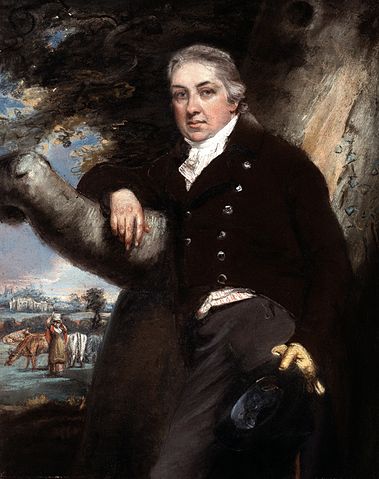
The deviation of man from the state in which he was originally placed by nature seems to have proved to him a prolific source of disease
(Edward Jenner 1749-1823)
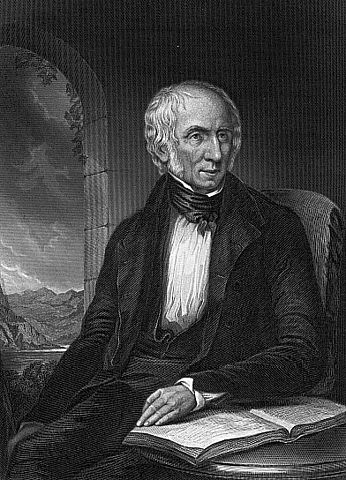
Nature never did betray the heart that loved her
(William Wordsworth 1770-1850)
No, apparently it never happened: Edward Jenner, the father of vaccines, and William Wordsworth, one of our greatest poets, never met, although they might well have done, being contemporaries and equally beguiled by Nature. What fascinating conversations might have taken place by the River Wye or the Lakes?
Of course, it’s the pandemic that’s conjured up this intriguing meeting in my mind. Two disparate lines of thought converging, ideas evolving through the weeks of lockdown, an easing, and then inevitably renewed restrictions and now a return to lockdown.
The first lockdown, coming early in Spring to a happily married, semi-retired individual, was never going to be a great hardship. And so it proved; it was one of the most beautiful Springs ever; regular walks in the countryside providing a collage of stimulating images, of trees, wildflowers, animals and birds. Those images firmly implanted into my memory, to revisit regularly and leave me in awe of Nature’s bounty. The quiet, absence of cars, and peace spoke to me of another way to live, of an (admittedly) impossible idyll. Man is little more than an irritant to the natural world, contributing nothing to its betterment; rather he arrogantly exploits and defaces it. Wordsworth may suggest Nature rarely betrays man, but hasn’t man betrayed Nature? In the most beautiful and heartfelt way, the poet cautions us to respect Nature; sadly, he’s a bit late to the party.
Whatever one’s views on vaccines, it’s a fact that Edward Jenner’s discovery was instrumental in eliminating smallpox from the human population. Similarly, dangerous and highly contagious diseases of children, such as diphtheria and polio, are now essentially non-existent in those countries that promote vaccination. The most recent exciting advance in the use of vaccines is in preventing cervical cancer through the vaccination of young people against the HPV virus.
So undoubtedly Jenner stands as a giant of modern medicine. But Jenner also opened a Pandora’s box, with only a tiny fraction of the knowledge of the immune system we now have. The basic concept of stimulating the immune response artificially with a relevant pathogen, or something resembling it, remains valid today. It’s some time since vaccination has taken on such global importance; COVID-19 has probably precipitated the greatest investment of human and financial resources into fighting a single disease that the world has ever seen. The corollary of this is that this same world now waits in anticipation of a vaccine to release it from social and economic lockdown. Moreover, hope for a “liberating” vaccine becomes part of the tool-box for maintaining public acquiescence to restrictions. And yet it is not at all clear that an effective vaccine will ever be found, in which case we must assume (and hope) that Nature will take its course and herd immunity develop “naturally”.
To me Jenner is suggesting, in his now famous quote, that man himself must bear responsibility for the rise of many diseases; that burden falls upon man because he deviated from a path that Nature originally intended. But man, and in particular the individual, cannot be held responsible for his own evolution, which certainly until more recent times was out of his hands. So I guess Jenner is arguing that man, having caused disease, has no option but to seek his own solutions, since he is out of harmony and has entered a state of conflict with Nature.
Were it correct, I suspect this unhappy conclusion would have been met with understanding, but also profound sadness, by the gentle Wordsworth. And yet today both men speak to a narrative that occupies much of our waking thoughts: we are in a global pandemic, one of our own making, we don’t understand how to break out of it and we’re not sure where to turn. Do we let events take a natural course, or do we place our hopes on Jenner and a continuing battle with Nature? There must be a middle way, but I’m not sure what that is.
To return to Wordsworth; his poetry speaks of communion with Nature. Fortunately, we can still enjoy and find solace in much of what Nature has to offer, despite the pandemic. But at the same time we mustn’t take Nature for granted, nor presume that we can overcome any object she may leave in our path.
So these two giants only ever met in my mind. But I think I’m the better for it.